

Sleep used to feel simple. You got tired, went to bed, and woke up rested. Today, many people wake up feeling like they barely slept at all. Nights stretch long and unsettled, and mornings arrive groggy instead of renewed.
Sleep hasn’t become less important. But modern life has made it far more complicated to access.
Before reaching for solutions, it helps to understand what’s actually happening in the brain and body, and why thoughtful, supportive supplements can sometimes help reinforce the natural sleep systems we already have.
This guide explores what healthy sleep really means, why so many people struggle, and the most supportive sleep supplements to consider.
Why People Struggle With Sleep Today
We live in a culture that asks our brains to be on from the moment we wake up until the moment we finally close our eyes. Notifications, artificial light, late-night work, constant decision-making, and emotional overload all compete with our body’s natural rhythms.
Research continues to show that chronic stress, evening screen exposure, and inconsistent sleep schedules disrupt the body’s internal clock and its ability to settle into deep rest, according to findings summarized by the Sleep Foundationand broader sleep research communities. When the nervous system doesn’t have time to wind down, sleep becomes lighter, shorter, and more fragmented.
At the same time, many people carry the pressure to “do more,” even at night. Sleep becomes another performance measure instead of a biological need.
The result? Exhaustion — with minds that won’t slow down.
What “Healthy Sleep” Actually Means
Healthy sleep isn’t just about the number of hours you spend in bed. It involves consistent timing, adequate depth, and natural cycling through the stages of sleep — including restorative slow-wave (deep) sleep and REM sleep.
Sleep scientists describe quality sleep as the ability to fall asleep within a reasonable time, stay asleep with minimal awakenings, and wake feeling mentally clear and physically restored. When these processes work smoothly, sleep regulates stress and mood, memory, metabolism, inflammation, and emotional resilience.
Poor sleep, however, doesn’t simply make you tired; it can influence hormone balance, immune function, focus, and long-term health, as numerous studies summarized by the National Institutes of Health have highlighted.
Supporting sleep, then, isn’t a luxury. It’s maintenance for the brain and body.
Why Sleep Issues Are Often a Nervous System Issue
Many sleep struggles aren’t really “sleep problems” at the root — they’re nervous system problems that show up at night.
When your brain has spent the day in stress mode, it often remains alert after bedtime. The body produces more stress hormones, the heart rate stays slightly elevated, and the mind continues scanning for tasks or concerns.
Organizations like the American Psychological Association have long pointed out that chronic stress can disrupt both falling asleep and staying asleep. In simple terms: you can’t biologically rest if your body doesn’t feel safe enough to slow down.
This is why people often say:
“I’m exhausted… but I can’t turn my brain off.”
Supplements that support the nervous system — gently encouraging relaxation, calm, and steady regulation — can sometimes make sleep easier to access, rather than forcing the body into sedation.
Top Supplements for Better Sleep
Below are some of the most widely researched and commonly used supplements that support sleep and nighttime nervous system regulation. Each works a little differently — and each can play a gentle role in helping the body return to balance.
Magnesium: Supporting Relaxation and Physical Unwinding
Magnesium plays a crucial role in muscle relaxation, nervous system regulation, and overall calm. Many people don’t consume enough through diet alone, and low levels have been associated with restless sleep and nighttime tension. Magnesium helps regulate GABA, a calming neurotransmitter that supports the body’s ability to slow down at night.
Sleep researchers have found that magnesium may support deeper, more restorative sleep by influencing neurotransmitters and circadian rhythm function — as summarized by the
National Institutes of Health.
It may also help reduce nighttime cramping, mild anxiety, and physical restlessness, all of which can make it easier to fall asleep. Unlike sedatives, magnesium does not override the brain — it encourages relaxation pathways that already exist. Over time, consistent supplementation can feel like “taking the edge off,” especially for people living with chronic stress.
Magnesium glycinate and magnesium threonate are often preferred because they are gentle, calming, and well absorbed. Instead of “knocking you out,” magnesium supports a natural process of unwinding — making sleep feel easier to access.
Check out the Balanced Edit’s top picks for Magnesium:

Why We Like Pure Encapsulations Magnesium Glycinate
One of the top-quality forms of magnesium ready for nighttime nervous system support is Pure Encapsulations Magnesium Glycinate — a highly bioavailable and gentle form of magnesium that many people tolerate well. Unlike some other magnesium forms (like oxide, which may be harder to absorb), magnesium glycinate is chelated — meaning the magnesium ion is bound to the amino acid glycine — and this structure improves absorption into the body and makes it easier on digestion.
Studies and nutrition resources note that this form is less likely to cause gastrointestinal upset compared with other types of magnesium, making it a solid choice for people who are sensitive or new to supplementation Healthline.

Why We Like Solaray Magnesium Glycinate
We like Solaray Magnesium Glycinate because it uses a gentle, highly absorbable form of magnesium that supports relaxation without causing digestive upset. Magnesium glycinate is chelated (bound to glycine), which helps the body absorb it more easily and promotes nervous system calm — a benefit supported by research summarized by the National Institutes of Health. It’s not sedating; instead, it helps the body unwind naturally, making it a great foundational option for nighttime routines. The dosing is sensible, the ingredients are clean, and it pairs well with other calming practices like L-theanine and evening wind-down rituals.
Glycine: Helping the Body Transition Into Rest
Glycine is an amino acid that slightly cools the body at night — and cooling is one of the brain’s signals that it’s time to sleep. It supports the parasympathetic nervous system, helping the body move out of stress mode and into rest mode.
Research suggests glycine may improve sleep quality, shorten sleep onset time, and reduce morning fatigue — findings highlighted in studies available through the
National Library of Medicine.
Glycine may also support memory and cognitive function upon waking, which is why many people feel more refreshed instead of groggy. Another potential benefit is its relationship with blood glucose stability—steady nighttime blood glucose helps prevent middle-of-the-night awakenings.
People often describe glycine as gentle and subtle. It doesn’t sedate — it smooths the transition between wakefulness and rest. Consistency tends to create the best results, especially when paired with good evening habits.
L-Theanine: Calming a Busy Mind Without Sedation
L-theanine, an amino acid naturally found in green tea, promotes a sense of calm without causing drowsiness. It increases alpha brain-wave activity — the same relaxed-yet-alert state seen during meditation — helping the brain shift out of “hyper-thinking mode.”
Research suggests that L-theanine may help reduce stress-related tension and support more restful sleep by easing cognitive overactivity — findings summarized in studies available through the National Library of Medicine.
It’s especially helpful for people whose bodies feel tired, but whose minds keep replaying lists, conversations, or worries. L-theanine may also reduce the stimulating effects of caffeine when taken earlier in the day — useful for people who are sensitive to afternoon coffee.
One reason L-theanine stands out is that it promotes calm without dulling mental clarity. You feel softer, steadier, and mentally quieter — not sedated. Over time, this helps the brain learn that nighttime is safe rather than something to brace against.
Check out the Balanced Edit’s top picks for L – Theanine:
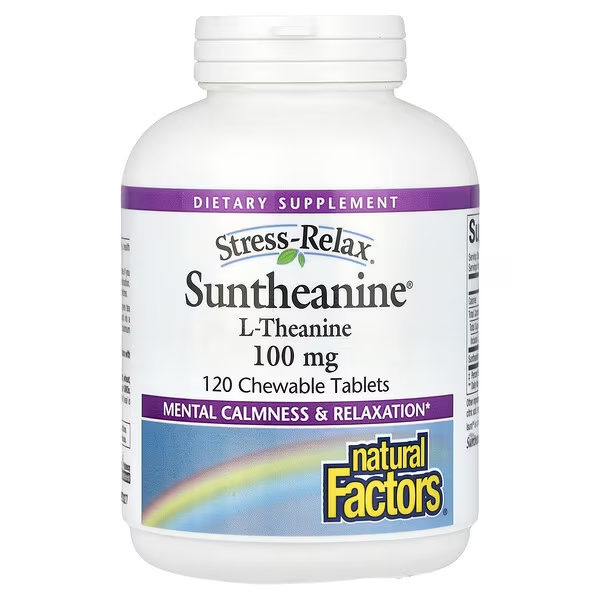
Why We Love Stress-Relax Suntheanine® L-theanine
We love Stress-Relax Suntheanine® L-theanine because it provides a pure, research-backed form of L-theanine that supports calm, reduces evening mental tension, and helps the brain transition into rest without causing drowsiness. Suntheanine® is a patented, fermented version of L-theanine that has been used in many clinical studies exploring relaxation and stress reduction, making it more consistent and predictable than generic forms. Instead of forcing sedation, it gently promotes alpha brain waves associated with relaxed awareness — which is especially helpful for people whose minds race at bedtime. Because it supports mental calm without impairing clarity, it pairs beautifully with foundational sleep support like magnesium and nighttime routines that reinforce nervous system regulation.
Suntheanine vs. Regular L-Theanine – What’s the Difference?
Not all L-theanine supplements are the same. Many generic products contain mixed forms or variable purity levels.
Suntheanine® is a patented form created through a fermentation process designed to mimic how L-theanine naturally forms in tea leaves.
Why that matters:
- purity and consistency — Suntheanine contains a highly standardized L-theanine profile
- research-backed — many of the clinical studies on sleep and relaxation used Suntheanine specifically
- predictable effects — consistent dosing means fewer surprises between bottles
Suntheanine is not “stronger” — it’s simply more precisely produced and more thoroughly studied, which makes it a trusted option for sensitive nervous systems and sleep-support formulas.
For most people, that means:
steadier calm, fewer racing thoughts, and less trial-and-error when choosing a product.
L-theanine on its own can be helpful — but when quality matters (especially for sleep), Suntheanine is often the preferred choice.
The Balanced Edit’s top pick for L-Theanine (Suntheanine).
Why L-Theanine with Suntheanine and Magnesium Work Well Together
Magnesium supports the body in relaxing.
L-theanine supports the mind in relaxing.
Used together, they complement one another by helping:
• muscles release tension
• the nervous system downshift
• racing thoughts settle
• the body feel safe enough to rest
This pairing gently encourages both the brain and body into a coordinated relaxation response — without forcing sleep or creating dependence. Many high-quality nighttime formulas combine the two for exactly this reason.
Herbal and Adaptogenic Blends: Gentle Nighttime Support
Herbs such as chamomile, valerian root, lemon balm, and passionflower have been used for centuries to promote relaxation and reduce nighttime tension. Modern research continues to explore how these botanicals may influence calming neurotransmitters like GABA, support the stress response, and ease mild sleep difficulties. The National Center for Complementary and Integrative Health offers helpful guidance on what current evidence suggests — and where more research is still needed.
It’s important to remember that “natural” does not automatically mean risk-free. Herbal products can still interact with medications, vary in potency, and affect people differently. Approaching them thoughtfully — ideally with guidance when needed — helps ensure they are used safely and appropriately.
Adaptogens, such as ashwagandha, work slightly differently. Rather than acting as sedatives, they help the body adapt to stress throughout the day, which can indirectly support calmer nights. Some studies suggest that ashwagandha may improve perceived stress and overall sleep quality, particularly in individuals experiencing chronic tension or fatigue.
For many people, herbal and adaptogenic blends are most helpful when the struggle isn’t simply “falling asleep,” but unwinding emotionally before bed. They offer gentle, layered support that encourages calm — without forcing the body into sedation.
Melatonin: When It Helps — and When It’s Not the Answer
Melatonin is not a sleep drug — it’s a hormone your brain releases in darkness to signal nighttime. Supplemental melatonin can be extremely helpful when sleep timing is off, such as during jet lag, shift-work adjustments, or irregular bedtime patterns.
However, melatonin does not resolve overstimulation, anxiety, or nervous system activation. Sleep specialists emphasize that melatonin is most effective for circadian rhythm problems — not chronic insomnia driven by stress — as explained by the Sleep Foundation.
High or long-term use may also interfere with the body’s natural hormone rhythm if taken without guidance. Many people mistakenly increase the dose when they don’t fall asleep faster, when the real solution is nervous system regulation, not more melatonin.
In short, melatonin is useful when your internal clock needs a reminder… but it cannot replace calming routines, emotional support, or daytime regulation. stress-driven alertness or nervous system hyperactivation.
How to Choose Sleep Supplements Without Overwhelm
The supplement aisle can feel like a maze. Labels promise deep, effortless rest, but more options often increase confusion.
Here are a few helpful guidelines to follow when looking for sleep supplements:
- start with one product at a time
- choose reputable brands with transparent testing
- look for simplicity over overly complex formulas
- track how you feel for at least 1–2 weeks
Remember: if you need five different supplements to sleep, your body is likely asking for lifestyle support, not more capsules.
Your goal is steady nervous system support, not chemical sedation.
What to Know Before Using Supplements for Sleep
Sleep supplements aren’t magic fixes, and they work best as part of a broader lifestyle approach. They may support relaxation, help regulate circadian rhythms, or reduce nighttime restlessness, but they shouldn’t replace medical care when needed.
It’s also important to remember:
- not all supplements are appropriate for every person
- interactions with medications can occur
- quality varies significantly across brands
- more is not better
Anyone with chronic health conditions, pregnancy, breastfeeding, or existing prescriptions should speak with a healthcare professional before adding supplements. Sleep issues such as untreated sleep apnea, significant depression, or persistent insomnia deserve medical evaluation.
Supplements are most powerful when used thoughtfully — as tools, not cures.
Why Supplements Work Best as Part of an Evening Wind-Down Ritual
Sleep doesn’t begin when your head hits the pillow. It begins hours earlier — with slow cues that tell the nervous system it’s safe to relax.
Calming evening rituals reduce stimulation, lower stress hormones, and help the body transition gradually. Sleep experts consistently emphasize that predictable pre-bed routines support deeper rest, as discussed in educational guides by organizations like the National Institute of Neurological Disorders and Stroke.
When supplements are paired with:
- dim lighting
- reduced screen exposure
- quiet activities
- consistent bedtime
they reinforce the body’s natural rhythm rather than override it.
Supplements assist — but rituals teach the body what rest feels like.
Who Sleep Supplements Can Be Helpful For and Who Should Be Cautious
Sleep supplements may be useful for people who experience:
- stress-related sleep disruption
- difficulty winding down mentally
- irregular sleep schedules
- mild insomnia or light restlessness
However, extra caution is warranted if you have:
- chronic medical conditions
- pregnancy or are nursing
- psychiatric disorders
- a history of sleep apnea
- complex medication regimens
In any of these cases, support from a qualified healthcare provider is essential. Supplements should support health — never complicate it.
Common Mistakes People Make With Sleep Supplements
Even well-intentioned sleep support can go wrong when people:
- take too much, assuming more equals better
- mix too many products at once
- rely on supplements without addressing stress
- take stimulating substances late in the day
- ignore inconsistent sleep schedules
Often, the issue isn’t the supplement — it’s expecting it to outwork stress, scrolling, caffeine, or constant pressure.
Sleep is a whole-system experience. Supplements simply help the body return to what it already knows how to do.
How Long It Takes to Notice a Difference
For most sleep-support supplements, the effects build gradually. Some people notice change within a few nights, while others may require several weeks of consistency.
Lifestyle plays an enormous role. People who combine supplements with stress reduction, regular bedtime routines, and emotional support usually see the best outcomes, as widely noted across behavioral sleep medicine literature.
Patience matters. Deep rest rarely arrives from quick fixes — it forms through repetition and nervous system trust.
Final Thoughts: Supporting Sleep by Supporting the Nervous System
Better sleep isn’t about forcing the body to shut down — it’s about creating conditions where rest feels safe, predictable, and natural.
Thoughtful supplements can play a helpful role, but only when they’re used as allies alongside nervous-system-friendly routines: slower evenings, emotional regulation, boundaries around stimulation, and compassion toward your limits.
When the nervous system relaxes, sleep often follows.
And in a world that demands constant alertness, choosing calm isn’t indulgent — it’s essential care.
Frequently Asked Questions About Sleep Supplements
1. Do sleep supplements make you dependent on them?
Most sleep supplements do not cause physical dependence, especially those that support relaxation rather than sedation. However, people can become psychologically reliant if they use supplements instead of building healthy nighttime routines. The goal is to use supplements as gentle support while also improving stress management, bedtime consistency, and nervous system regulation.
2. Are natural sleep supplements automatically safe?
No — “natural” does not always mean safe. Herbal and over-the-counter sleep supplements can still interact with medications, affect hormone balance, or be inappropriate for certain health conditions. Quality, dosage, and individual tolerance matter. It’s always wise to choose reputable brands and talk with a healthcare professional if you have medical concerns or take prescriptions.
3. Can I take multiple sleep supplements together?
Some people benefit from combining certain sleep-supporting supplements, but stacking products without guidance can increase side effects or actually make sleep worse. Many blends already contain multiple ingredients, so doubling up can unintentionally raise dosages. When in doubt, add one supplement at a time and check with a knowledgeable provider.
4. Should I use sleep supplements every night?
That depends on the reason you’re using them. Some people use sleep supplements occasionally during stressful seasons, while others find steady use helpful for rhythm support. If you feel like you can’t sleep without them, that may be a sign that stress, lifestyle factors, or nervous-system overload need attention. A healthcare provider can help you decide what’s appropriate.
5. What’s the best way to start using sleep supplements?
Start simple. Choose one well-researched supplement, take it consistently for 1–2 weeks, and observe how your body responds. Avoid changing multiple things at once, and pair any supplement with calming evening habits — dim lights, predictable routines, and reduced screen time. Supplements work best as part of a sleep plan, not the entire plan.